
The winner (revised)
Based on feedback from the virtual customer panel, The Dual has been refined. This yields the final product.
Last week we commissioned a comprehensive synthetic AI user study through SYMAR. As a sanity check, we also ran the personas and research questions by Claude Cowork.
Not measuring preference—measuring behavior
This analysis isn't about asking which product (from the original set of 53) is the prettiest. We already know that; that's what the five-person jury was for. The question now is: would you actually buy this, use this, and what would you pay for it?
One package, three winners, fifteen questions per panelist. The questions test behavior and price perception, not taste. Not "do you like this", but "would this sit on your nightstand or would you put it on your desk". No stars, no rankings. Just: what would you actually do.
Claude produces a clear and thorough report The_Winners_v2.pdf
The Dual doesn't quite land
The Dual wins the jury as a deep-work focus tool. A walnut cube with a brass soundscape, a brass twist-dial and, at the product engineer's insistence, a recessed e-ink display. Focus timer by day, soundscape alarm by night. Retail €149. Smart on paper. Two functions, one object.
And that's exactly where the panel pushes back. Question one: does the story "one object for focus and alarm" hold up, or does it feel like too much? And: what does an e-ink display that's always softly visible do for you compared to a screen that only lights up when you tap it?
The answer is consistent, and honestly, not what we wanted to hear. The dual function dilutes The Dual. An object that has to carry focus, sleep, and wake time does none of them perfectly. And that screen, however soft, is still a screen. You're building a calm object and then you're putting a display on it anyway. That's the distraction you just tried to remove, back to square one.
The Dual gets refined
So we strip it down. The alarm is out. The e-ink display is out. The "two things in one" story is out. What's left is what was always at the core: a focus timer, fully mechanical, no screen.
You turn the brass dial to 5, 10, 15, 30, or 45 minutes. The dial position is the display. Nothing lights up, the mechanism just runs. At the end, a tuned brass soundscape rings. One warm tone, no notification. No app, no subscription, no battery needed.
The price drops from €149 to €129, early-bird €99, because there are fewer features and because it's positioned more sharply. The promise now fits on one line: most focus tools add technology, The Dual removes it.
That's the refined product. Not the product we entered the panel test with, but a stronger one coming out of it.
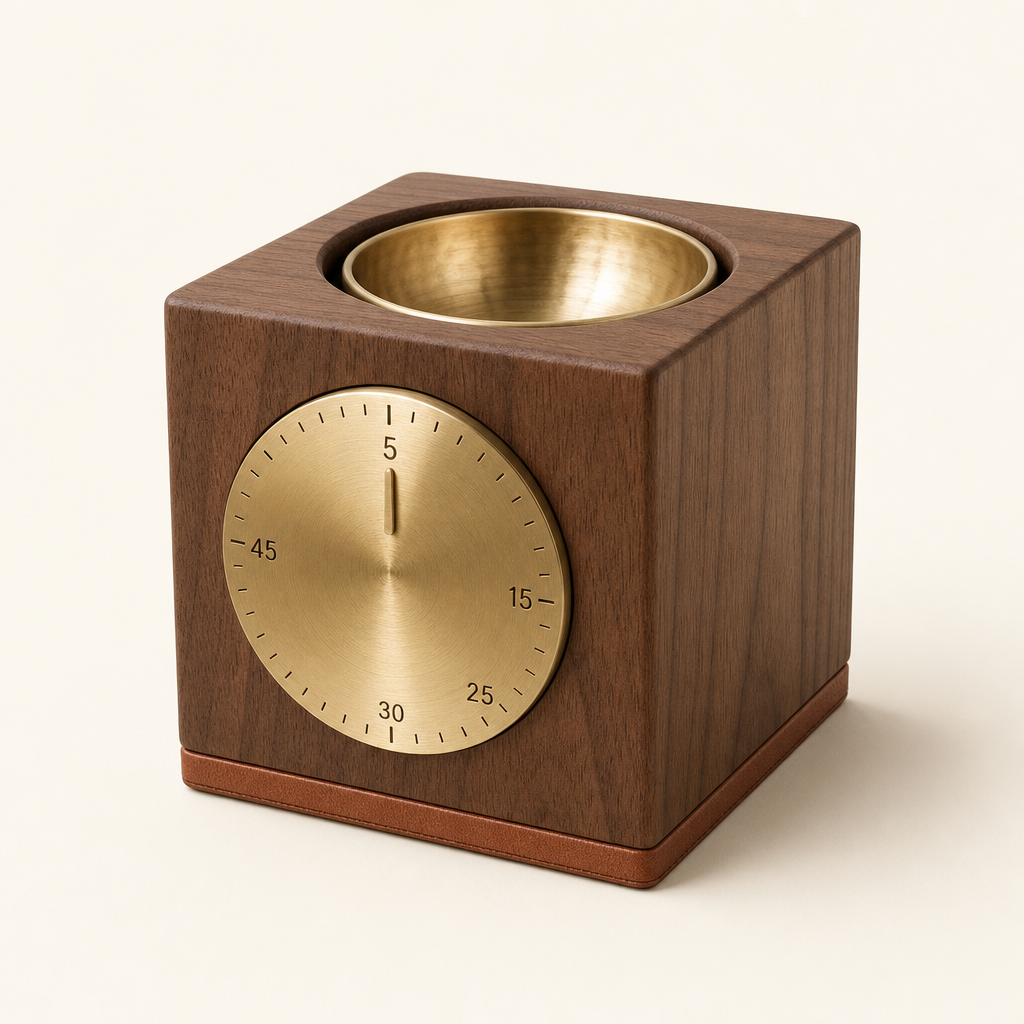
But here's the thing: the name The Dual was based on the timer's dual function. And now we only have one function left. The name doesn't fit anymore. We'll park that for now.
The other two hold steady
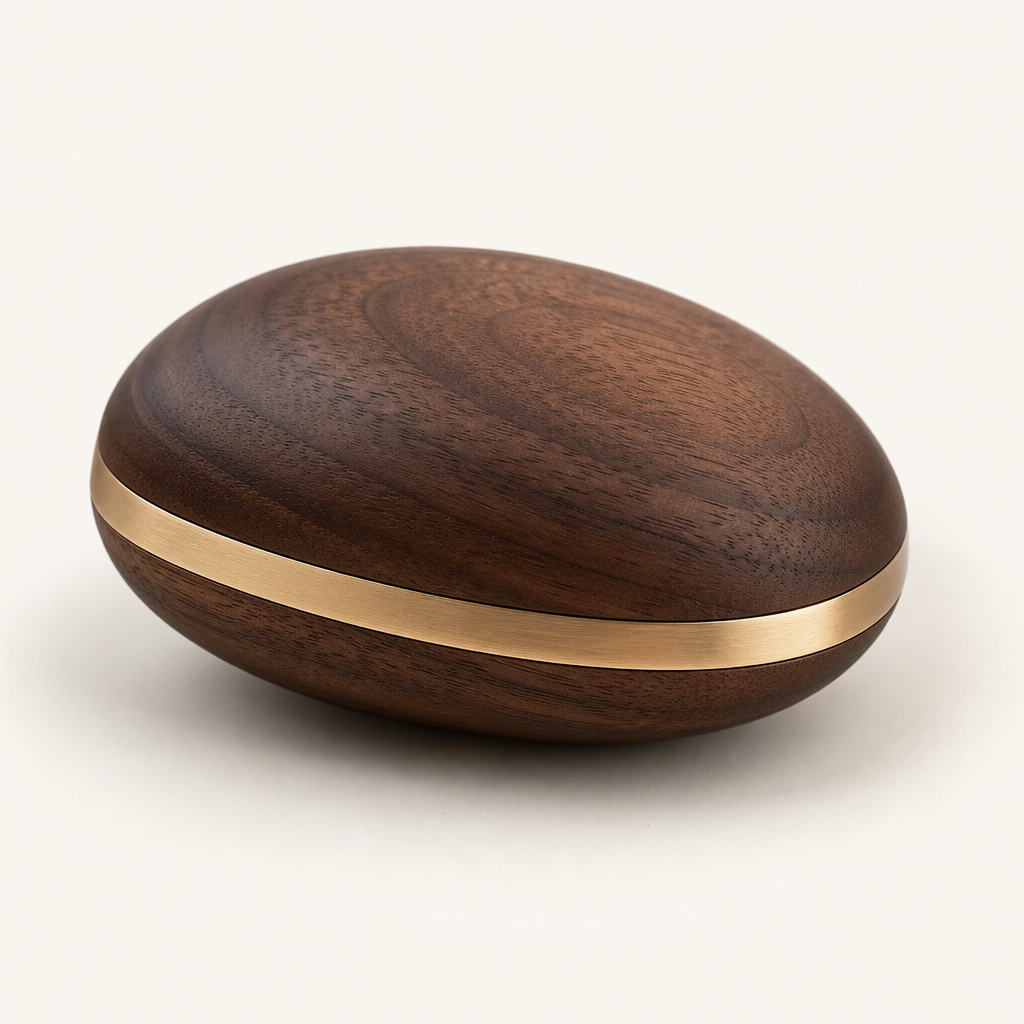
The Wave, the tactile breathing coach, comes through the panel largely intact. A sort of egg made from solid walnut wood, a brass band for settings, four modes for stress, sleep, focus, and reset. The main adjustment is in price: shifting the standard version to €109 and a deluxe at €149, so the entry point is lower and margins stay intact.
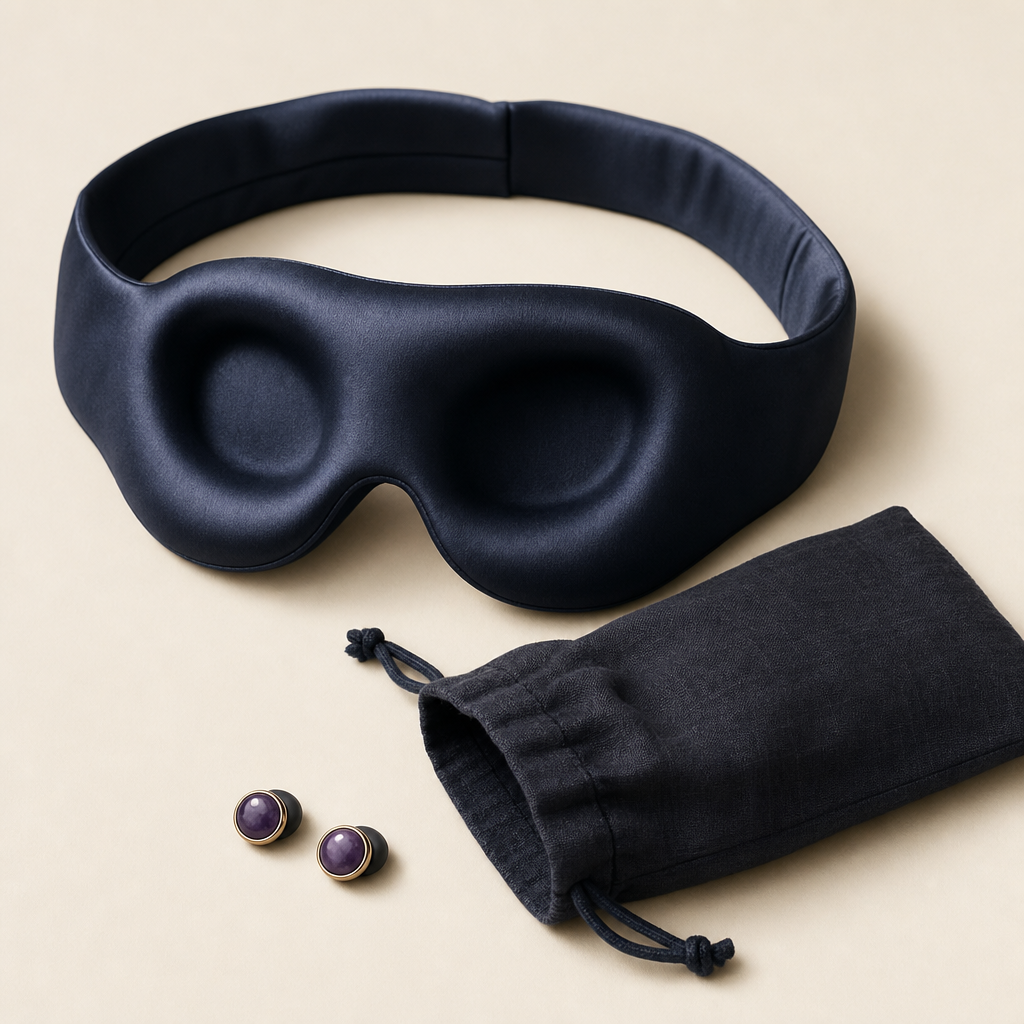
The Night Set, the 3D blackout sleep kit, stays as is. Beautiful silk fabric, comfortable back closure, two ear plugs with amethyst caps in a linen pouch. €99. The panel sees no rattling story here, just a complete set.
What a panel actually does
Here's the lesson. A panel isn't there to validate your winner. It's there to stress-test the winner and see what holds up. The Dual came in as the cleverest concept and came out as the weakest, because clever and desired aren't the same thing. What remained after the revisions is simpler, cheaper, and sharper.
AI identifies the three products. The jury refines them. The panel tests them to see what a person actually wants on their desk. We decide what to do with it.
The winner
The Dual, The Wave, and The Night Set aren't competitors. They're three jury winners, each in their own category (focus and wake, breathing, sleep). The question now is which of the three becomes the product we move forward with. That's The Dual, for four reasons:
- First, the score. In the scoring model (the Idea Generator), the mechanical Pomodoro timer, what The Dual became, ranks first with a score of 4.30/5.00. The sleep mask (The Night Set) sits at 4.28 and the breathing cube (The Wave) lower. The Dual won quantitatively too.
- Second, the jury. Five personas (designer, consumer, lawyer, competitor, product engineer) called The Dual the strongest, "cleverest" concept: two functions in one object, focus timer by day and soundscape alarm by night.
- Third, founder fit. The Dual aligns most closely with the DNA of co-Founded by AI: anti-phone calm-tech. The promise ("most focus tools add technology, we remove it") fits this object better than a mask or breathing coach. Does it fight the constant distraction of our phones, notifications, and screens? We're always reachable but rarely truly present. That's why we asked ourselves a simple question: what if we built an object that helps people take back control of their time and attention?
- Fourth, and this is the real kicker: the customer panel actually challenged The Dual the hardest. The dual function and e-ink display diluted it. But by stripping that away, removing the alarm and screen, the purest version emerged: a fully mechanical focus timer. That became the refined The Dual, cheaper to make (price from €149 to €129/€99), higher margins, sharpest positioning, and the best story for years of content. The Wave and The Night Set "held steady" but produced no stronger product from the criticism. The Dual did.
So the logic is counter-intuitive: The Dual entered the panel as the cleverest concept and came out as the weakest, but precisely that stripping down produced the sharpest final product. That's why it's the winner moving forward to prototype, pre-order, and Kickstarter.
Our final choice has landed on the refined The Dual. Pre-sorted by AI, tested by the AI panel, and selected by the founders. The other two products sit on the bench, though they're strong candidates for our experiment too.
Next step: finding the right name for our The Dual. This is no longer the same The Dual we saw emerge three weeks ago in the first AI guidance. And that's exactly the point.