
Design Lessons
Where AI ends, the designer begins
AI has already helped us with product selection, positioning, customer research, branding, website design, and countless visualizations of Minagi. But this week we hit a clear wall: conceiving a beautiful product is one thing; designing a product that can actually be manufactured is another.
We ask Claude for technical drawings, CAD-like designs, STEP files, and CMF specifications. The results look impressive at first glance. Until we look closer.
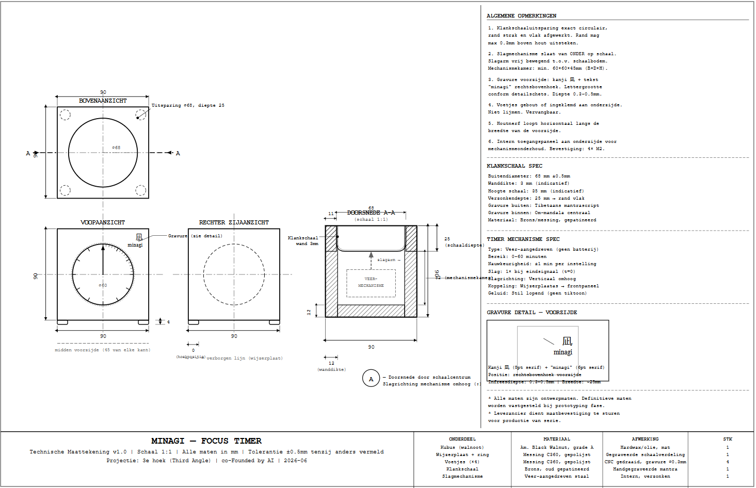 Screenshot: Minagi's technical drawings according to Claude – none of it checks out.
Proportions are off, components don't fit together technically, and production details are sometimes simply invented. AI can describe beautifully how Minagi should look, but still doesn't understand how wood, brass, mechanics, tolerances, and manufacturing come together in the physical world. For this step, we need a human.
An unexpected rejection
Our first instinct makes sense: we approach an Amsterdam design studio that Geert-Jan knows from his previous entrepreneurial life. We pitch Minagi and talk about co-Founded by AI. The initial reaction is enthusiastic. A day later comes a rejection anyway. Interestingly, it barely concerns the design itself. Their point is more fundamental. If you want to seriously build a strong product brand, they say, you need more than good design. You need deep domain knowledge, sustained commitment, and someone who stands fully behind the product. That sticks with us. Until now, we've treated Minagi mostly as a product we can develop with AI's help. But a brand built around attention, focus, and calm technology ultimately also demands credibility, expertise, and a face. A design studio rejects us and in doing so exposes a bigger question: how much human do you actually need to build an AI-native company?
LinkedIn as talent pool
Meanwhile, we keep looking for the technical design. Geert-Jan posts a simple #durftevragen call on LinkedIn. We're looking for an industrial designer with experience in premium materials, mechanical products, prototyping, and technical design. Someone who can bring Minagi from visualization to a manufacturable prototype.
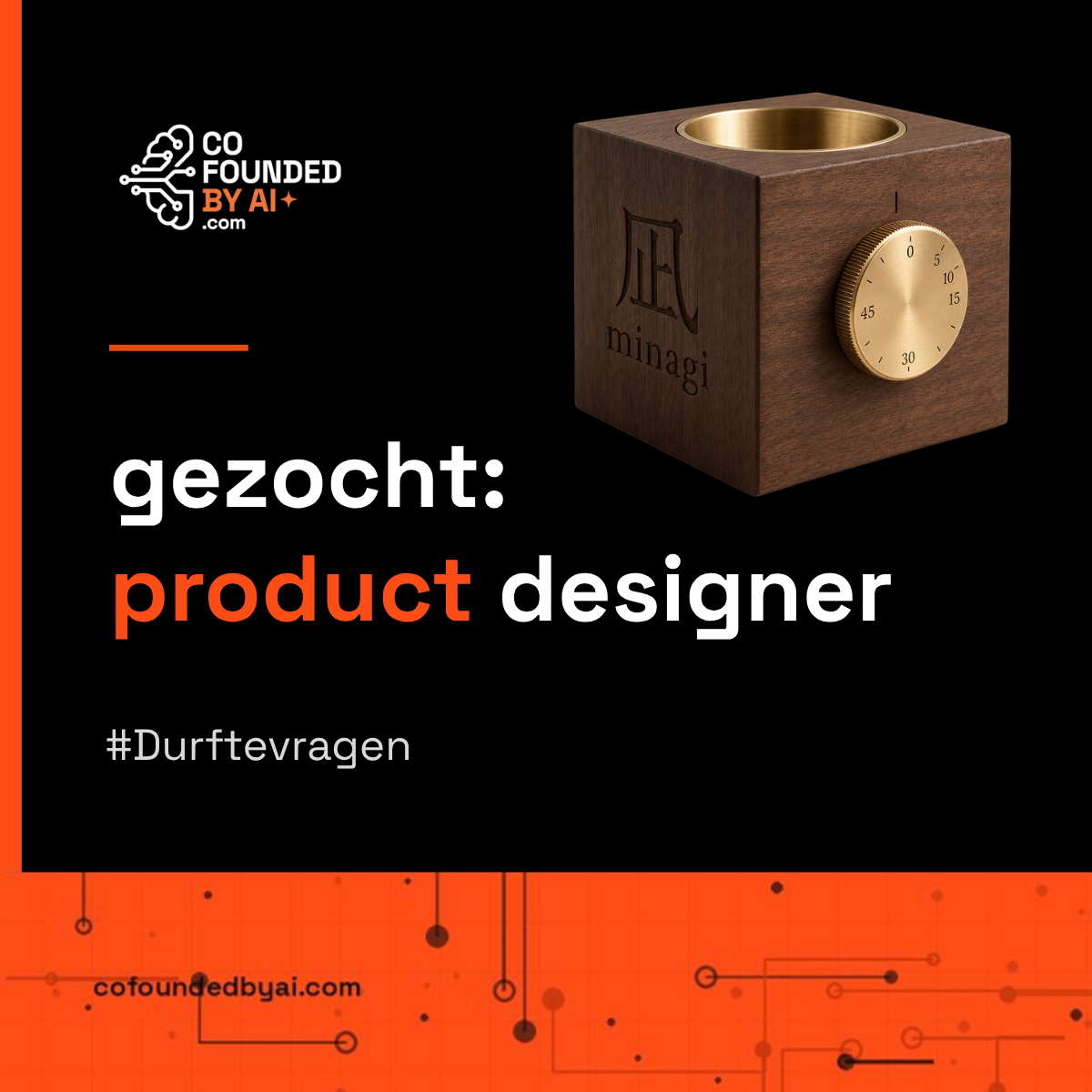 Image: LinkedIn post in search of a designer
Within a few days, a longlist of fifteen serious candidates emerges. And so we put AI back to work. Instead of simply asking Claude "Who's the best designer?", we first determine what a good Minagi designer should actually score on. Mechanical experience counts heavily. So does experience with wood, brass, and other premium materials. Because of the sound scale, we also look at acoustics. Beyond that, CAD and STEP experience, prototyping, CMF knowledge, and an eye for premium design objects matter.
This creates a scorecard against which all fifteen designers are measured equally. A few moments later we have a ranking, arguments for each candidate, and a clear top three.
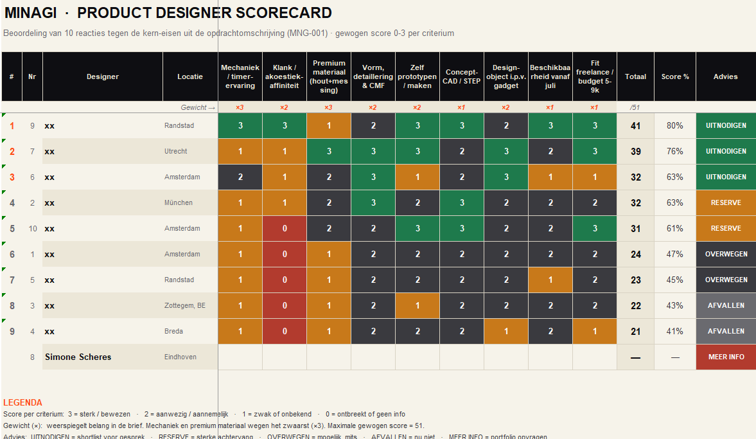 Image: overview of the score sheet with designers (names removed) in XLS. Compiled by Claude.
AI doesn't make the decision that way. It mainly makes the groundwork much faster and more consistent. Instead of spending hours laying out fifteen portfolios and LinkedIn profiles side by side, we can spend our time on conversations where feeling, chemistry, and craftsmanship ultimately count. A week later we speak with two of the three selected designers. And this time we've got it: Minagi has a product designer.